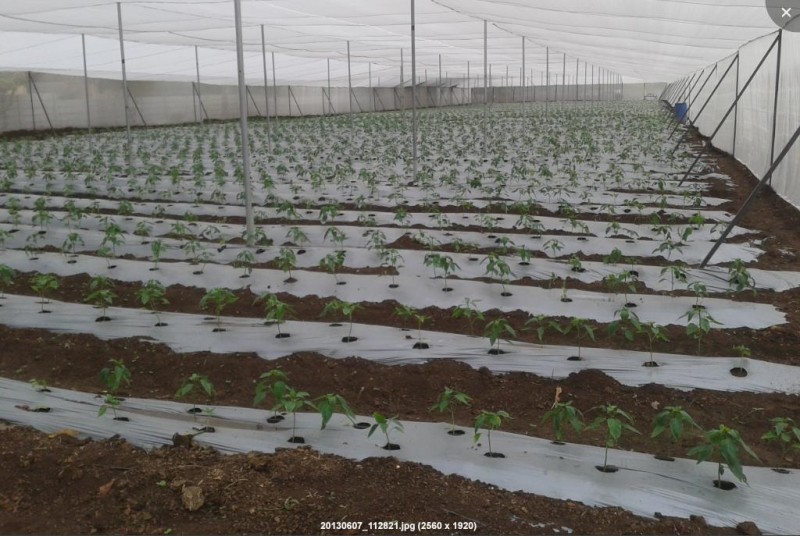
Growing capsicum in polyhouse - my experience

why is the water of river Ganga so pure as compared to the others ?
why is it called as a holy river and said that it has healing properties?

can i replicate a similar model and use this water for my plants ?
what will be the effect?

come on people, i cant keep this going alone, i request you to plz share your thoughts, ideas, suggestions.

Vivek

Hai Vivek,
Thanks for all the information, shows all your years of hard work. You had mentioned you are planning a 7 acre capsicum project. Going by your work, you need personal attention and care for each plant and something that cannot be delegated to employees. In such a case how are you planning to manage a 7 acre project with the same personal care and monitoring ? And more with your future 70 acre plans ? Are you training someone ? setting up systems and practices ? I am sure this will be the next big step in taking your work from personal level to commercial scale !

Thanks
narasimha

Greetings Mr.Narasimha,
new question, and it is very true. right now i have about 2 acres of polyhouse which i can personally attend to, but what when its 9 acres? and then more?

farming is not my main profession, and i have other commitments which keep me occupied. so i cant give 100% at times.
so what do i do ? i train my labor. its not been a one day job, but more of a on going process.

there are times when i cant visit my farm for weeks, but i still have 3 pair of eyes in my polyhouse.
my labor are all trained to identify infestation, or conditions which lead to certain infestation. i share and explain them the way of working.

as i shared earlier, i have the practise to highlight various problem areas in my polyhouse with different colors/numbers, so does my labor. so while i am monkeying arround in my farm, and my labor is working hard in the polyhouse, they can put up signs which i can identify and study for myself.

i teach them why a particular task is important and the co-relation with others.

and the best part is that my labor were born in families who have been farming for ages. so i learn a lot from them, their friends, relatives and the network they have.
so its a both way learning process.

anyone can do any work, but only a person having genuine interest and the right skill can do it more efficiently. noone has any knowledge/skill initially , but are trained gradually yea?

so i take personal interest in training my labor.
the trainings i conduct/organise are not limited to crop infestation / irrigation. but also for periodic/regular maintenance, electrical training, personal development, discipline etc.
then i have a system for color/number coding all the inventory/observation samples etc, which further helps, as my labor cant read, i can communicate in terms of colors and numbers.
so there are various systems which are implemented which are not limited to language, knowledge, experience etc.
i take my team around to other farmers, vegetable market, labor market in our free time, so they can observe and have exposure to things in their own way, as they are the people who are/will be actually be working in the polyhouse, so ideas can come to their minds also as how to make a certain process more friendly, efficient. and honestly, there have been times when they have given me the ideas.

apart from this, i have to meet certain norms for my labor (training, living conditions, working condition, wages etc) as they are required by my buyers and certifications i have/applied for.

my target is to have 9 acres of polyhouse by mid of next year, 70 acres a year after that, and then 800 acres of polyhouse within 3 years. this is going to be the biggest setup at one single place in the world. so it is very sure that i will be needing skilled/trained labor to help me.

Vivek

2 Likes

Hi Viks,
first of all congratulations :slight_smile: :slight_smile: :slight_smile:… visiting the site after a long time, bit preoccupied with the office work and happy to see the chain going ten pages and 4k plus hits, i think its creating viral like Gangam style.
well, good work Viks, educating many young people.
keep up the good work and all the best :slight_smile:

cheers,
Suresh

That is one hell of work ! I would love to see how you go about achieving it. And would love to visit and learn from your work. It would definitely bring in more educated people into agriculture and set new trends in agriculture as an occupation ! I for one (engineer by degree, diverted to manufacturing 10 years back) am seriously planning my future with agriculture. These works really inspire us. And as you had mentioned its the love for the field and products that ensures success and longevity, not just investment-return numbers (though they will eventually come ). Thank you for sharing and spending your valuable time in answering our questions, it is invaluable.

narasimha

Dear vikas,

let me congratulate first…and thank you.

I am not into this activity…but, what you are sharing and writing your knowledge, experiences are basic requirements in any type of agricultural activity…i.e. horticulture ,agriculture , animal farming etc.,

Really, your sharing is precise, down to earth and touchy. Any common interested person can understand and implement to his any activity easily. That is the power of authentic and un-intentional sharing…Appreciate your courage, openness as well as transparent sharing…keep writing as your growth…and wish you to become a role model to all.

once again thank you and just as a interest …to understand I too will be a part of your article reader.

once again, thank you. :slight_smile: :slight_smile: :slight_smile:

Wish you all the best.

kasturiraju.

ok so my new name is Vikas.
farming is lacking the touch of professionals + educated people. not that traditional farmers are not educated, they are in their own way.
education meaning conducting experiments, sharing, documenting, exploring and not being ashamed to get yourself dirty in the farm.
a normal farmer is so busy with his daily routine, and lack of resources that he cant communicate with others out there.
there are growers doing all types of experiments everywhere, following practises, but keep it to themselves, or cant share it with the masses because of limitations.
so a lot of awareness needs to be spread.

and the change is already taking place, even tough we are not aware of it. there are mega projects coming up all over india. local farmers are making groups, government is helping farmers, customer is getting more aware, so there is a huge change happening all around us.
And food is a basic need, the demand will always be there, the land available will also always be the same.

so making the best out of my limited resources is my way of working.

as most of the people (participants,readers) are farming enthusiasts, farmers, i am sure everyone is doing their own part of research and learning. so if we use this combined information, knowledge, experience, in form of answers or questions and share, it would be very much appreciated by everyone.

also i would request to ask/share any type of information on the post, so we can have inputs from everyone.

Vivek

Greetings Mr.Narasimha,
Having sound education, trains our mind in a certain manner, helps address the curiosity/reasoning, makes us work in a certain method. as an engineer you have various strong areas, which you’ll implement when you get into farming. so educated people really need to get into agriculture.

you are into manufacturing u said, is it related to agriculture?

and plz ask anything without worrying, i have all the free time in the world. and moreover there are many participants willing to share their knowledge here, who can be of great help too.

Mr.Narasimha, thankyou for your support, and you are most welcome to visit me anytime. everyone is. but as a thumb rule, you’ll have to get gold bricks while coming.

Vivek

Hello Mr.Kasturiraju,
one of my intention is to make it simple, which can be understood by everyone.
i myself do a lot of reading online, but at times it gets so technical (with figures and graphs) which i cant really understand. so i try to keep it simple, so the logic behind my practises can be understood.

the technical documentation (with figures and graphs which i cant understand) i am working on.
i too am in the phase of experimenting, so the results will only come when the cycle is finished.

meanwhile i am floating some of the ideas and practises i follow/plan, to get opinion from others, and guidance from someone who is actually doing it.

i honestly cant keep this going all by myself, involvement from everyone is required. so i am expecting some inputs from you in your next post :stuck_out_tongue:

Vivek

hey Suresh,
thanks a lot buddy!
i see your a fan of gangnam style :stuck_out_tongue: the fellow cracks me up too :wink:

i was wondering where you been as its been quiet a while,
so anything new that you came across and would like to share ?

Vivek

Hai Vikas,
Yeah now I will have to go searching for the gold and bricks ??? will keep you updated on my journey ! And will visit your work before I start my farming. Can you send me your address and contacts.

Thanks
narasimha

hey aman, if you are still following, i found a link to the meter i have thru a link for seeds :stuck_out_tongue:

ebay.in/itm/3-in1-Soil-Moist … 4d139b30d3

hello Mr.Narasimha,
you can tell me in advance so i can make arrangements accordingly for a grand welcome :smiley:

and i have had two friends from farmnest who visited me lately, and they really did get what i had asked them to ;D

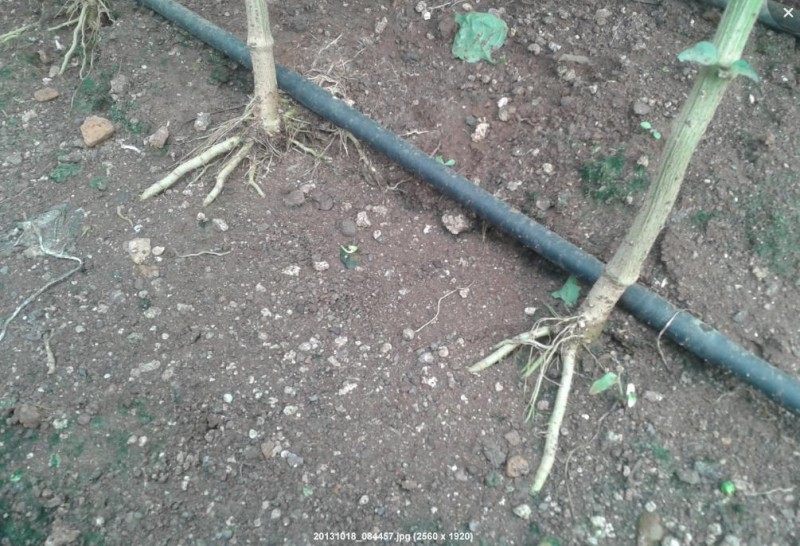
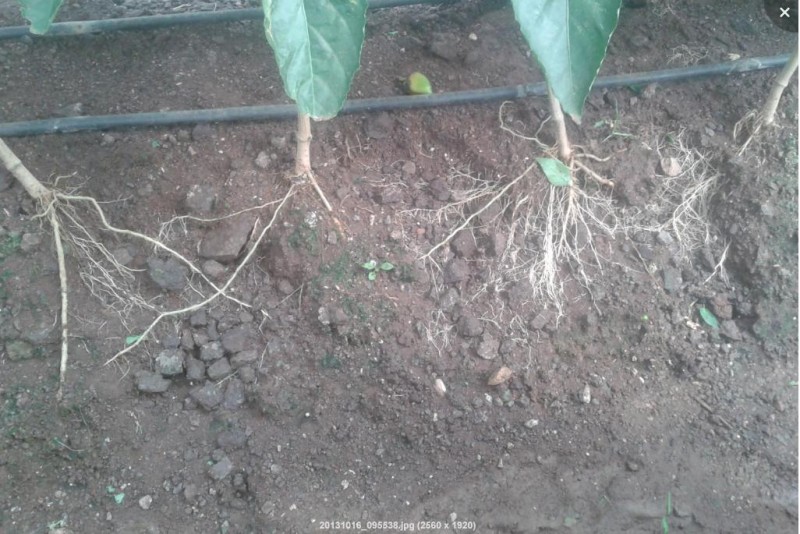
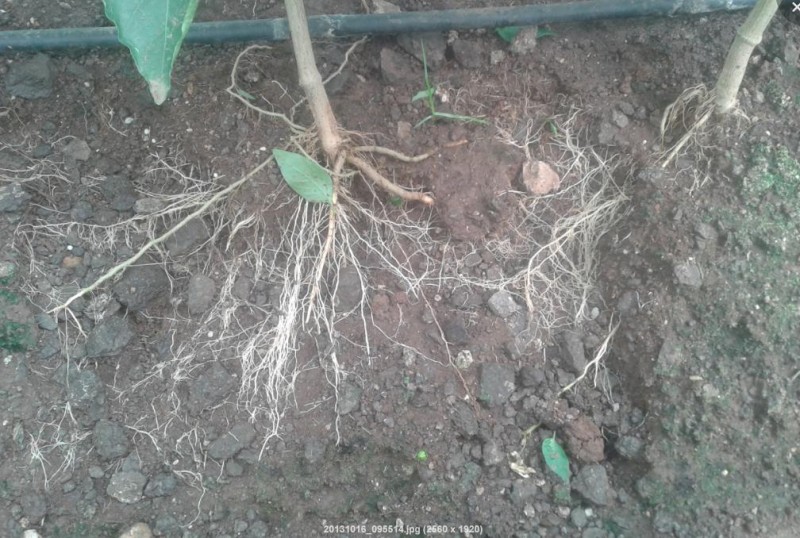
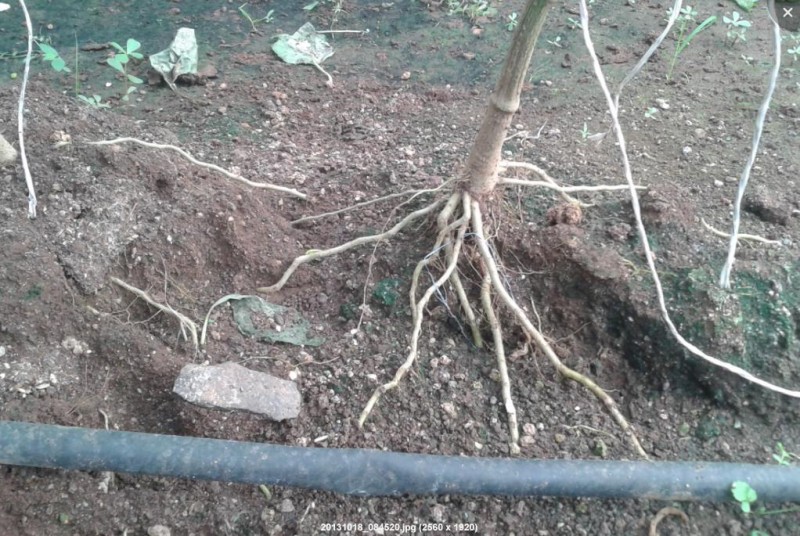
82 Days young roots
some pictures i clicked specially for the roots and the beds which were washed off during the rains and sheet damage. there are stones (literally) in the beds.
how can these roots spread freely in a limited space?
better roots = better intake = better output, can we agree on that?

and nematodes?? what? where??


its been a while since i added any nutrients to the soil. so i have prepared a slury with some cultures which i’ll be introducing in a days time to increase the uptake of the nutrients which are already available in the soil + some yummy food for the microbes.

  • Potash Mobilizing Bacteria – these micro-organisms when activated and during multiplication (way of working for these cultures) release various enzymes, which convert immobilized, form of potash being present in soil (naturally or via fertigation) into mobilized form. By this it helps plants by providing one of the primary nutrients in ready consumable form. Then boost up plant vigor which ultimately results in reducing of the production time and crop yield.

  • Sucrose Breakdown Fungus – these microbes release enzymes which breakdown sucrose available in the soil and convert it into food for available microbes in soil After being activated and again during multiplication, these microbes release enzymes like sucrose, which help convert sucrose into glucose and fructose. This helps the microbes by providing them with ready food. These basically boost up microbial soil biomass which ultimately results in good soil health.

  • Phosphorus Solubilizing Bacteria – these are highly viable cells, which are in dormant stage and proliferate quickly after being introduced in soil. As the name itself, these cultures help breakdown the Phosphorus available in the soil.

  • Sucrose Breakdown Bacteria – self explanatory

  • Cellulose breakdown bacteria – these cultures convert cellulose into glucose, and provide ready food for the cultures and increase the soil biomass.

  • Cellulose breakdown fungus – self explanatory

  • Raffinose breakdown bacteria – they breakdown raffinosa available into food for the cultures. Basically the enzymes produced during multiplication (reffinase and melibiaze) converts the raffionose into glucose and galactose, which is again a ready food for the cultures.

  • Fat breakdown bacteria – these cultures produce various enzymes like lipase, which convert fat into flycerol and fatty acid. This helps create comfortable environment for the microbes by providing the required food.

  • Azotobacter – these cultures convert atmospheric nitrogen (N2) and even amide form of nitrogen available in the soil into plant available nitrogen form. (nitrate – NO2)

  • Protein Breakdown Fungus – these cultures release enzymes like protainases and peptidases, which convert available protein into amino acid.

these cultures are available in the market and can be grown also. (my process documentation is in progress)

Vivek

Question for the day - What are the do’s and dont’s after adding such microbes ?

Ah, that is some business model! :wink:

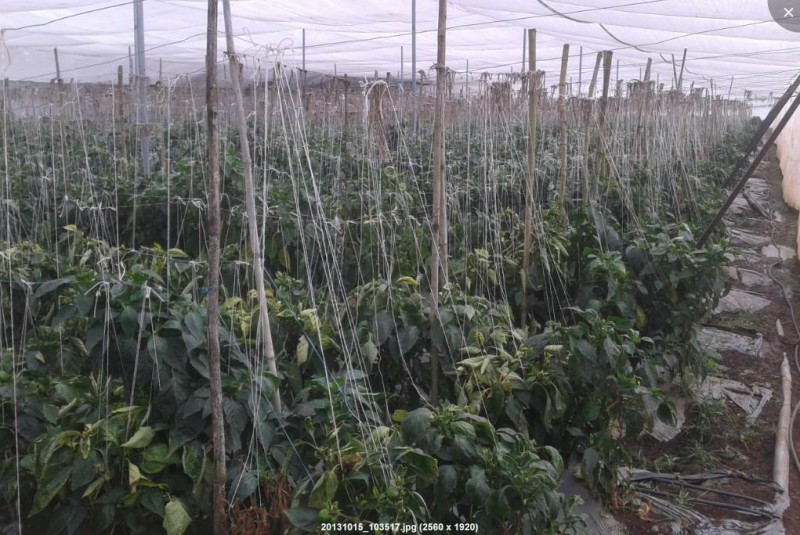
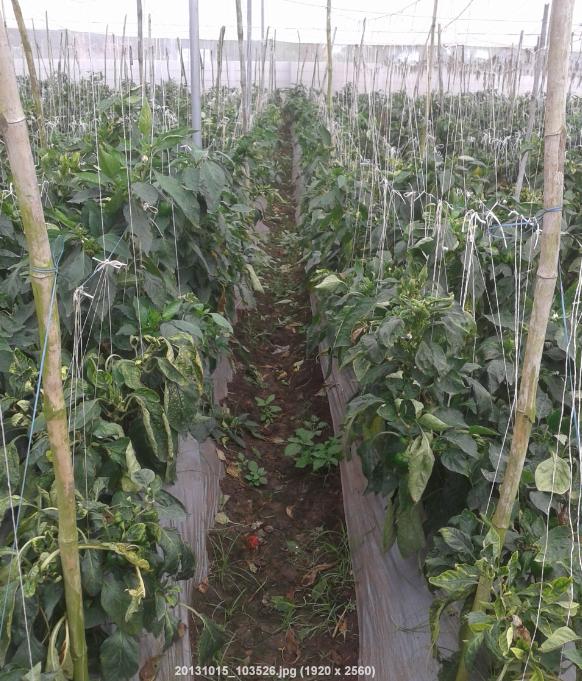
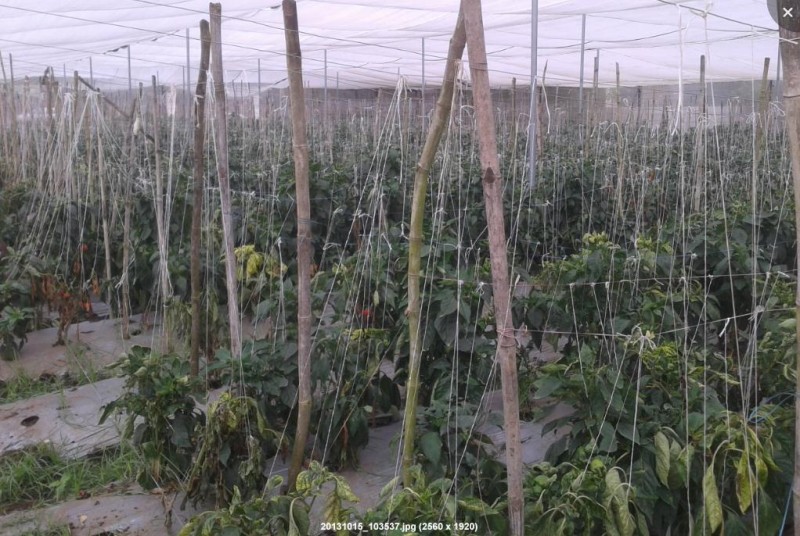
These are the pictures of a 4000 sq mtr shadenet house, which is owned by a very dear friend of mine, having Palladin (green capsicum).

This site was my favourite uptill last 2 months, and then suddenly things started to take a ugly shape.
the main reason is that the owner had started this as an investment. he was so lucky that his peak produce started when the market was Rs750/crate, and he recovered all his investment in the 4 months time, and stopped taking care of the plants/setup as he was satisfied that his money had been recovered.

hope the message has been communicated.

Vivek

as long as we can see the pictures… let me ask, What are the benefits and disadvantages of mulching?


what ?? i tried to bribe you with fresh juicy capsicum Mr.Chandra. but alas!

how come u never share anything here (in capsicum post), apart from appreciating participants? and maintaining the discipline.

Mr.Bhanu,
the culture (bacteria/fungus) part was specially for you :slight_smile:
ur next on my list of friends who should get me goodies :wink: ohh… no wait! ur already helping me with the seeds procurement :slight_smile:

hello dear mr. viks
can you add inorganic fertilizers into the system develpoed with so many microbes as mentioned by you?wont they be killed? iam confused with this concept of mixing inorganic and organic?
please enlighten me .thank you