Growing capsicum in polyhouse - my experience

hey Aman,
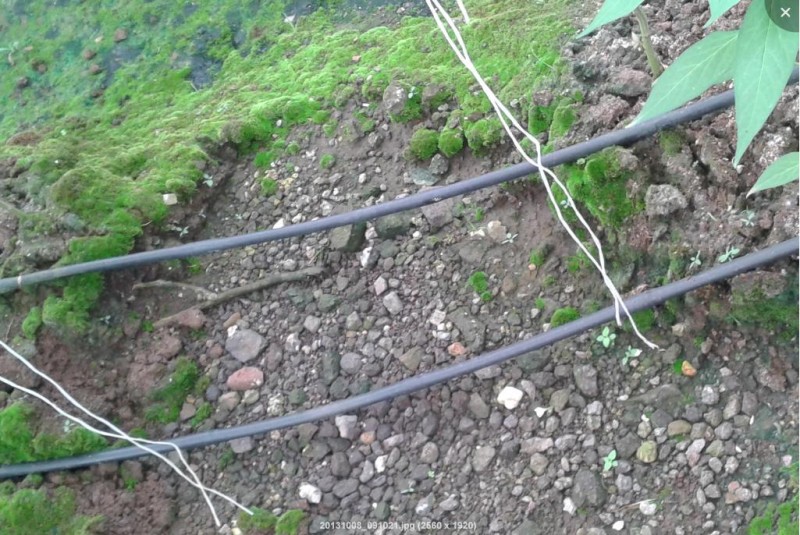
i clicked a picture of a bed which was drained due to water leakages when the sheet blew off :s

there are little stones (1"- 3") you can see, the rest got drained off… the point is i use various mixtures for preparing the beds. it is not at all necessary that the soil should be porous like the red soil or any other. its a combination i have made specially considering my resources, the practises i follow and the crop requirement.

Vivek


Hi Ravindra,
it is the best practise to take calculated risks, and wise too.
capsicum grown properly in shade net can also give you rewards and experience.

there are growers who do open/shade net farming of capsicum in my region, and giving me tough competition (production wise). i do not take them as threats for me, but like opportunities to learn from them.

my point is you can grow capsicum anyhow, if climate is favourable (mostly for open farming) and you plan it out, anyone can get good returns provided proper practises are followed.

Vivek

VARIOUS HELPFUL CULTURES

topping up of basal dose and cultures specially keeping the moisture level in soil, and to prevent fungal infestations.

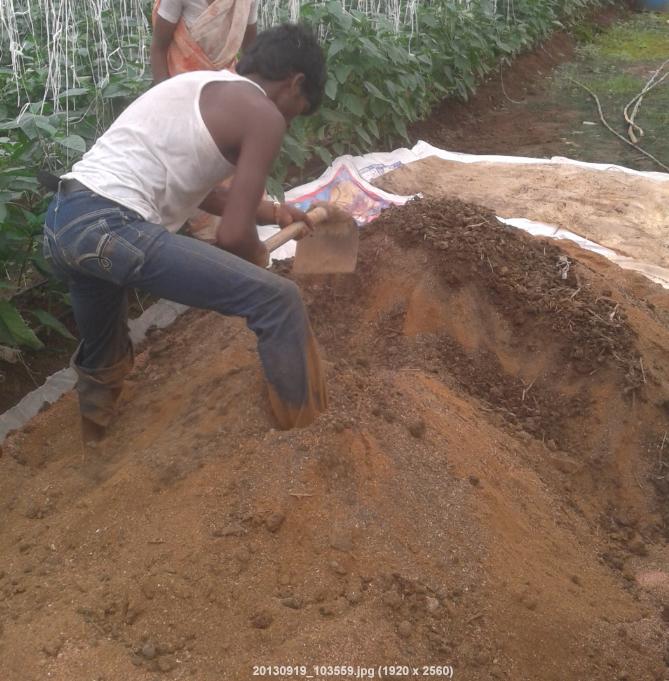
Picture 1 - mixing of the basal dose
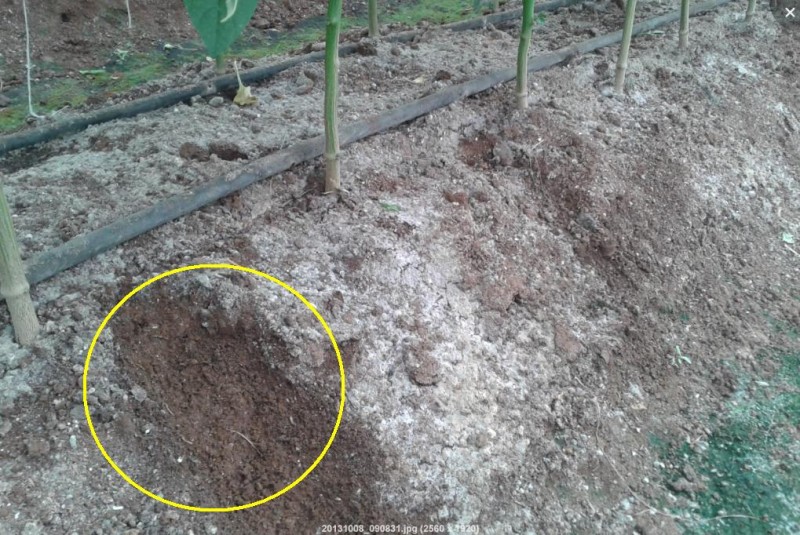
Picture 2 - 20 days later, the cultures can be seen all over the beds, having good coverage and density. (the red patch in the yellow circle is the actual bed color, rest all white color are the cultures)


QUESTION FOR THE DAY

this is related to the spraying part

  • What are spreaders and penetrators?
  • why are they used?
  • when should they be used?

Hi Viks,

What is basal dose consists of and how the culture formed. Forgive me if my questions are stupid.

thanks

Mr.Bhanu,
farming is a science, and has technical areas. raising funds and creating a setup can be done, but if the crops/practises are not proper, returns can be severely affected, as they are directly related to production/quality.
i see you are preparing very well in the technical aspects related to growing capsicum.
I have been preparing for getting organic certifications from various bodies internationally, so I have a different set of practices I follow, which are customized to the resources available (internal) to me and the conditions available (external)
lets take an example, as we had discussed a major issue of dumping and nematodes earlier in your region, which is a soil based infection. So there are two choices-

  1. Use of chemicals – which gives quick results, but last only for a limited time and fades off eventually. Then specifically, I cannot use them cause the use of harsh chemicals will eventually reflect in the residual tests, which will result in disqualification of my application for organic certification. Also the chemicals used are expensive.
  2. Use of various cultures – I add various cultures like Trichoderma, Bacillus, Pseudomonas. These are fungus and bacteria cultures. The best part about them is they multiply on themselves in double amount. 1 will become 2, 2 will become 4, 4 to 8 and so on. They need certain conditions to multiply faster and promote growth.
    This was general.
    Talking specifically about the details of the basal dose which was mixed on 19 Sep, it had neem extract, bone meal, blood meal, self prepared compost, and Pseudomonas. I also added a self made mixture. Which had gram flour, jaggery, raw cow milk, and self made nirgudi (english name -Vitex negundo) extract. As I told you, I was having a lot of water (due to rainy season) in the ground, and October (hot climate) was starting, I knew there would be fungal attacks, which then will lead to viral infection. So i added trichoderma, to prevent fungal attacks. What this does it overcomes the bad fungus. Then I combined this with trimming the lower leaves (within 1 feet from soil) to further prevent catching of infection (which enters the plant via the leaves which are close to the soil) and then further took a fungal spray the next day to clean the wounds left by the leaf trimming. So now I don’t have to worry about anything till the temperature starts to drop and remains cool (about 30 degrees) which will be till almost feburary. The next set of dose would be given in Jan considering the dry conditions I will have in the polyhouse after feburary.
    So I cant depend on just one practice. I have to plan and do simultaneous practices with considering my aim and the conditions.
    Procedure of preparation of the various cultures and their benefits are available online throughout. I myself am in the process of documenting the preparation part with the benefits, effects, practices I followed etc. this is very extensive and in depth, so it will take me about 2-3 yrs to complete it.
    I’ll post some pictures and procedure in general by tomorrow so you could get an idea.
    And keep the technical questions coming Mr.Bhanu.

Vivek

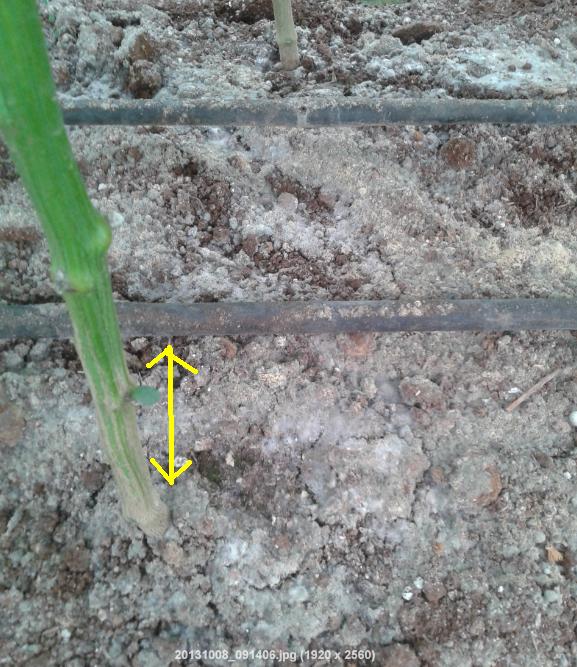
also i moved the drippers to about 2-3" away from the plants now. to further prevent the fungal growth near the stem. now where is the fungal attack going to come from ?


SAY HELLO TO MY LITTLE FRIENDS

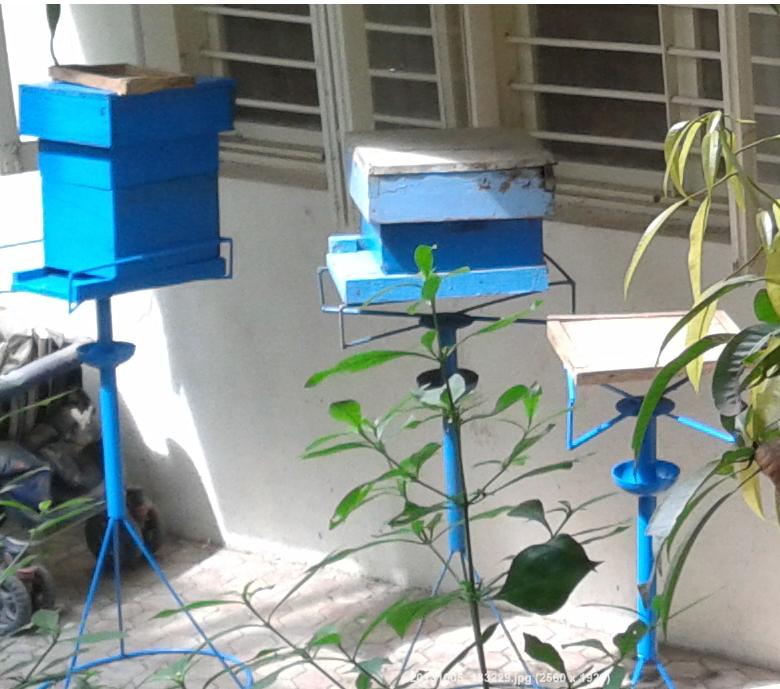
i got 3 boxes of my little helpers, couldnt introduce them to the polyhouse, as there is lot of variation in the temperature and humidity inside and outside the polyhouse due to sudden rains.

i have been taking special precautions so they will be more comfortable inside the polyhouse.
its a very long practise altogether.

capsicum is self pollinating, but a lot of research has proved it further helps increase production by the help of bees.


i always wonder why is organic agriculture produce more expensive than normal - my product being capsicum,
have you thought why ?

Do you mean organically grown capsicum?May be you are preparing your product to pass the ‘organic’ tests which would eventually satisfy the conscious western market.I understand the EU and US have robust standards that they expect and put products through vigorous scrutiny.I wonder how uncheck the Indian psyche is catching up with the organic fever.In the west people want everything organic(the affording classes) including chicken and eggs.Hats off to people like you for the noble endeavour.

Well said Vivek,

Farming is science and it should be. Keep learning and develop the Processes where these process should follow and continue those processes. Like all Big businesses run process oriented. Forgive me if i talk too much…

Anyway, First question is how to get these cultures Trichoderma, Bacillus, Pseudomonas and where?
All these are good cultures and what is the best environment to provide them to develop.

Thanks again

Vivek, I am looking for some good quality capsicum seeds. Which ones do you advice? Can I get it online/couriered? Thanks in advance for your answer.

Hello Mr.Bhanu,
these cultures are available in fertilizer shops, agri-research institutes.
once you have them, you can grow them yourself.
its a very simple process. a lot of info is available online for them. i am preparing the documentation myself too, will let you know soon.

there are various other cultures apart from these. there are some to increase uptake of a particular nutrient, to make the soil mushy, increase the oxygen in the soil etc.
as a farmer aiming for organic production, it is very necessary for me to know which culture to use when.

Hello NARDC,

seed selection is tricky, any variety of crop has various number of seed types.
so it depends on your resources and practises.

talking specifically about capsicum, i have grown Syngenta (Bomby - red & orobelle - yellow ) and Namdhari (NS280 -red & 281 - yellow) and syngenta paladin for green.
namdhari is about Rs.10/plant (red,yellow) & Rs2/plant (Variety Indra, Green color), syngenta is about Rs.2/plant(red,yellow,green)
thats about the cost part, including germination in my region.

about green if i compare Indra & Paladin (both are green varieties), i am a paladin grower, and i have tough competition from Indra growers (Yield Wise), but is more prone to dumping.
so that is all i know about green.

about yellow & red, namdhari has better yield, is more resistant to infestation. i’ve had cracking issues with syngenta, but i took special care, and it was taken care of.

so there isint much i could get. i can grow any variety in my polyhouse, but then each variety has different characteristics, some can tolerate high temperature, high water in soil, humidity, infestation etc. so the practise will change a bit once i get the grip of it.

i’ve had a friend ship 200 capsicum seeds from US, and sadly none of them germinated :frowning:
but then i dont stop, i still am asking friends/ seed companies / research institutes all over he world to send me all the possible varieties of capsicum they have.

if you are looking for Organic certification / produce, u’ll have to look specially for seeds grown/treated naturally. i too am in the phase to procure these seeds, so i am doing a lot of homework for their source and technical details. will let you know as i progress.

about online order and shipping, you’ll have to check with the companies sir, as they have their own shipping policies for quantity, location etc.

apart from this, consulting the local growers is the best habit, as they can guide you better.

if you are looking for more specific information, plz do tell, so we can try and find it, and i’ll get to know your point of thinking.

Vivek
Hey Pravin,
well, very true. you have got the catch. People who are rich, privileged, health cautious, want the best of everything, simple cause they can afford it on a regular basis.
thats the enduser part.
but as a organic grower, i have to take additional care/pain for my plants. i have to do a more intense observation, spend a lot more time with the plants on daily basis. have a good knowledge about pest/infestation (cycle, media, spreading pattern etc.)
so its obvious i’ll charge more as the work i have put in growing them is more.
a simple example, Automobile manufacturer, Bentley, its a car, so is Maruti, so why such huge difference? its because of the practise, standards, customization that makes Bentley expensive, same is the case of Organic Farming.

about the market for organic capsicum… what do you think ?

NARDC,
i forgot to mention one thing,
there are growers of red & yellow capsicum, who use syngenta, as it is Rs 2 / plant, and make a wise decision.
the point in this is, they can sell their produce as red & yellow capsicum, or can sell it as green capsicum also.

hope you get what i am trying to say here.

Vivek

what about the spreaders and penetrators which are used while spraying ?

common… theres a whole lot to discuss

  • effect of different light on plant (white which is normal, then green, red)
  • growing plants in light 24 hrs (artificial light during night)
  • do plants like music?

These all are capsicum specific as of now. so plz share what you feel.

[quote=Viks]
continuing from where i left, a bit about day to day activities…

  • Waterin the walkway – I water spray the walkways, bed walls, during peak summer time when the temperature is above 40 degrees, and foggers do not perform efficiently ( due to tall plants, blockages in nozzles etc) also running the foggers doesn’t help me, as the wind / air movement in the polyhouse is uneven, and the drop in temperature doesn’t last for long. So I wet the polyhouse with a garden hose pipe with a soft flow nozzle. Sufficient water in the soil, helps drop the temperature, and the results last for days together. I enjoy doing this, as it gives me chance to play in the water.
  • Harvesting, – I can harvest an acre of capsicum all by myself, and then faint in the end. So I take help from my 2 labors. Sorting is done while harvesting directly, and then packed. It was fun for me initially, but breaks my back now. Harvesting interval/schedule, I have already shared my practice.
  • Maintenance work – general maintenance like drip filter cleaning, fixing leakages in drip/fogger. Greasing curtain pullies, filter cleaning of my diesel machines, oil change, machine maintenance, fuse change and all other little work is done by me. Some are skilled and some can be done by everyone.
  • Chill out – this is what we do when we have nothing to do.

there might be some other activities, which i cant think of right now and must be missing here… if you find something missing, plz add.
[/quote]hi viks
thank you very much for your discussion on this topic. it is really an eye opener. i also appreciate the subtle humour inyour posts. keep it up

hi viks
i am from tamilnadu. i just adore your posts and your subtle humour. just two questions. why you have not gone for growbags? i think that growbags are more useful with regard to maintaining ec & ph and also incontrolling nematode problems.
as you had mentioned abt organic cultivation , are you not using chemical fertilizers? kindly clarify. thank you

Hello Mr.AK,
thankyou for the appreciation. i would take them as compliments :slight_smile:

i am more of a traditional farmer with modern technology. and i am doing all sort of possible experiments i have come across and those i could think of.
every individual has a certain way of working, and methods. i have tried growing capsicum in polybags in the first year. the size was about 15" height and about 8" diameter, those were the ones which are used in nursery (black color, Rs 4.8/pc) but i prefer the soil raised beds more.
reasons being -

  • less labor intensive - preparation wise
  • even growth and coverage of various cultures in the soil.
  • easy to maintain (while adding basal dose & turning the top layer etc)
  • as the temperature is high during summer in my polyhouse, i can wet the beds and keep the root zone and the polyhouse temperature cool.
  • more exposure to air and sunlight, which promotes and are helpful for the cultures i add in the soil.
  • gives more space for the roots to develop. i pay a lot of attention for root development. the bags i used were not sufficient, the roots penetrated the ground thru the drainage holes in the lower side of the bags. my plants have roots which have like a quarter meter long network (obviously at a later stage)
  • gives no hiding space for pests, stale air, moisture etc

talking specifically about maintaining ec & ph, how does one measure them, both in soil beds and soil in grow bags? say today i measure the ec & ph at 100 random places for both the soil bed and soil in growbag. after an year of same treatment, would the ec & ph change in same proportion in both types?
ph in soil will change overtime with the use of fertilizers, if on beds or in growbags. the beds which i have, it is easier to maintain a comparatively uniform level of ph, as the water spreads evenly (i emphasise a lot of proper bed making) so the changes happen uniformly. where as in growbags, it would be limited to individual bags.

so raised soil beds are more supporting to the practises i follow.
about nematode problems, i have never had a single plant with nematode problem. as i shared earlier, i pay a lot of attention and customise my bed preparation and basal dose.

and yes, i practise organic cultivation. there is this huge misunderstanding about organic and chemical fertilizers. Organic certifications have certain criteria’s and then on top of that country has their own norms and standards for acceptance level.

Currently as my plants are young, i do not need to push them, soon i’ll be introducing various fungus and bacteria to increase nutrient uptake (again depending on my target), but yes, i will be using chemical fertilizers at a later stage, to meet certain targets, but that doesnt mean my produce cant qualify for organic standards.

now about pesticides, using some non-acceptable pesticide/molecule (organic standard wise) can result in disqualification and huge claims. so one needs to understand what is allowed, what is not. if it is allowed, upto what level etc.

i will post more details and standards regarding organic produce, so you’ll get a better idea about it.

Vivek