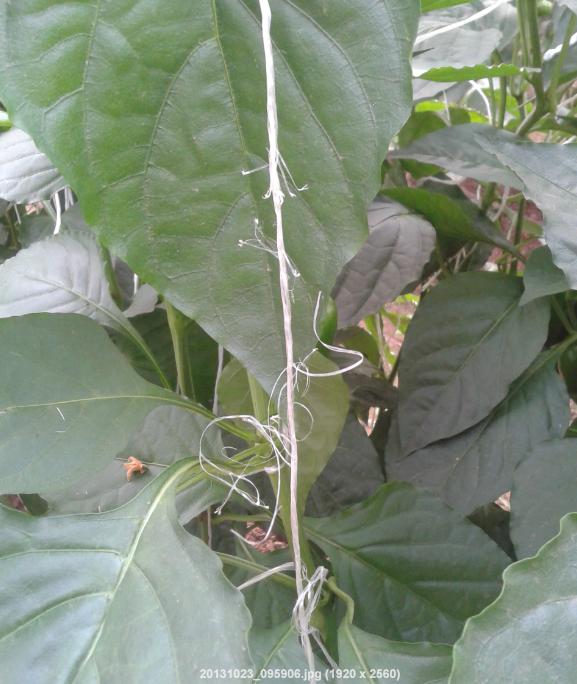
Growing capsicum in polyhouse - my experience

Hi vikas sorry vivek,

what type of compost/vermicompost / bio-slurry organic manures are usefull/used in polyhouse farming. If so, what are the values and quality parameters accepted i.e. NPK values. Can u share on this topic.

thanks and regards,

kasturiraju.

Hello Mr. AK,
microbes sure will die if i use something they are not comfortable with or which is not favourable for them. i use NPK dosages (basal dose/routine fertigation) , to add NPK into the soil. if you read the little info in the list , u’ll notice a few of them focus on better uptake of NPK & most of them make food for the microbes.
this was the use part.

these are the cultures to help uptake. then there are cultures to prevent fungus attacks and/or soil born infestations.

now the conditions to make the microbes feel at home. different microbes have different needs to perform, activate, multiply. if the microbes are there in the soil, and the conditions change (which are not favourable) the growth/functioning will stop. but once the conditions (favourable) are met again, they get activated.

i do use chemicals when i have to. but when i am planning to add some culture, i will stop using them well in advance for the effect to fade off. and more over, as i was wanting to introduce bees in the polyhouse, i had completely stopped the use of chemicals since a month. so i dont need to worry about killing them (microbes&bees) but if i want to (when i change the culture in next basal doze for hot and dry weather conditions) i can use chemicals and/or change the conditions to stop their growth to kill/stop them. and introduce new microbes which will take over.
incase harsh chemicals are used, certain precautions need to be taken.

as all these cultures are fungus/bacteria, you shouldnt use fungicides before and after you introduce them (time depending on the power of the fungicide molecule you use)

use of sulphur will also kill these microbes.

so till i dont have any major infestation which needs chemical treatment, i will let the microbes do their work. if you must have read earlier, i added some cultures to prevent fungal attacks when there was high water level in soil and the temperature was getting hot. that was done, and now the uptake cultures cause i have a lot of fruits and flowers on the plants, which i am preparing to harvest a bit now and major during diwali & marriage season (another 15-20 days)

so this all i have planned and implemented considering the climate, actual conditions in my polyhouse, plant stage, market demand/price.

Vivek

hey Mr.Kasturiraju,
thankgod you got the name correct, when i read Vikas, my hands started to reach out for my bag full of grenades, then i read vivek, and they stopped.

ok the term “values” really makes me shiver. i add a lot of slury. lot doesnt mean daily, but once a week for sure. so sunday is funday for my plants :slight_smile:
honestly about the values of NPK present in them, i am not sure. but its a fantastic idea and i can look into that.

and the term slury, i am not sure is right for what i use/prepare. its more of a extract + fermented leaves/stem/root of different plants + cow dung + ghee + curd + flour of pulses. i really dont know what its technically called. bit of a modification to “Panchakavya”

then to add certain micronutrients, there is a regional plant, which (extract) has all the micronutrients, and thats not even the best part.
the best part is it develops/creates different nutrients at different stages in its lifetime. it will have Molybdenum in its stem and leaves, after its cut, the next stem and leaves will have Iron, then after they are cut, the next will have copper and so on.
i am having big problem finding the technical name of the plant.

then there is again a plant called “nirgudi” locally. but i remember i posted the english name. so even the fresh and fermented extract of that plant i use with water soluble neem oil, karanj oil. plain water depending stage wise. meaning, initially it will be with plain water, then with neem oil also, then with karanj oil, then with both neem and karanj oil.
thats more towards the pesticide part.

apart from that… and the cultures, there is nothing more i practise in that.
wormicompost i prepare by common bed,drain system.
thats it i guess.

there are many more other such self prepared slury/cultures/tonics which many growers are using. i have seen many monster plants on youtube, where it clearly shows that every individual has their own way of making these tonics.

Vivek

helloooo…
plants can grow on their own if water is there…
but commercial growing is different… when high targets are set (production / quality wise) will the seeds just planted and watered help?

Question for the day - What all does a plant need (in terms of nutrients) in its lifetime to meet our targets ?

Vivek

Hi Viks,
Congratulations for a very interesting and knowledge provoking blog.As far as my knowledge goes plants require the following nutrients.
Nitrogen,Phosphorus,Potassium,Calcium,Magnesium,Sulfur,Iron,Manganese,Zinc,Boron,Copper and Molybdenum in different quantities depending on the type of plant.
Vishnu Dasharathe

Dear Vicks,
Sorry I forgot to mention our intimate friends-Sodium,chloride,Hydrogen ,Oxygen and Carbon.

                      Vishnu Dasharathe

Hi vivek,

thank god …first of all I don’t have hairs on my head…if you would have used grenades…imagine…what would have happened… !!!

Hi Vishnu and vivek,

This is what…I was waiting for the… chord to strike… on this forum …both are striked…good…All the farmer’s will be saying usage of organic manure i.e. just as like vermicompost,compost, bio-slurry etc…

Hence, there are no expected results in fields and most of the people will be cynic and away from using/depending organic manures by giving excuses like costly, not worth, very slow in result etc., Friends, each and every plant acceptance/requirement of nutrition is different and varies.

So, all agriculturists can focus on lots of issues in detail like the exact minerals/nutrients content in organic manure required for each and every type of crop,plant’s, etc., based on these nutrient’s availability/presence factor only the organic manures price shall be finalise while buying from market/others instead of blind purchasing by bargain on lumsum quantities or Rs. 3-00 to Rs. 7-00 per kg and spreading/adding the same into the fields presuming it is correct, without knowing what is their in purchased organic manure.

Can each one participate and authentically start to post the exact nutrient’s content of the organic manure requirement of the each and every different plant/crop…vivek can we expect first posting from you for capsicum…let start…

thanks and regards,

kasturiraju.

Hello Vikas

Yes, i am following your posts daily and indeed i find a lot of new information everyday.
I have been busy in reviving my gerbera plants and arranging the labour for it also i thoroughly searched my local market and found that the time to start preparing capsicum seedlings is now.
So, i have almost done all the preparations regarding the market search, seed variety, bed preparation, basal dose etc. I will be starting it soon, just waiting for the seeds to arrive.
Also, i will be requiring your help now and then. I will be really great full if you could help …

Well, thanks for all the post. I am sure its an inspiration for most of us.

Aman

1 Like

Hello Mr.Kasturiraju,
why wait for something to strike when you can actually be the one to strike ? :slight_smile:
so if there is anything missing, and you feel is important, you should share it right then and there.

Plant nutrient is one of my favourite subject. and again thankyou for listing down the various nutrients and elements related to it.
we can categorize them in Major nutrients, Macro nutrients/ supporting nutrients, and micro nutrients.

i feel we should first get to know the role of each of the nutrients. then we can discuss in detail about the source (chemical/organic), the requirement (quantity wise , stage wise), the combinations of various (chemical/organic) fertilizers/cultures, the mode (i.e via drenching, drip or foiler spray), the dosage interval, DO’s and DONT’s related to them, and finally relate all this (organic vs chemical) in terms of money (input and output)

i think this way it will be easy to understand, so we all can go step by step from the basics and understand the concept, and have inputs from everyone at all stages.

i will start formulating and post as and when i have something useful in this direction.

Vivek

hey Aman!

good to find out whats happening with you.
you said you have finalized the seeds, market search, bed preparation, basal dose. so can you provide a bit info about each?

i have also given Green Capsicum seeds for germination yesterday, and will be shifting them in 20-25 days or so.

and all this while i thought i knew it all (not all, but most), but then there are so many people here who have experience and detail study, who will help you and contribute in discussions.

and me, you can always find me here.

Vivek

As i was working for a organic setup since beginning, i had to meet certain requirement in terms of setup.

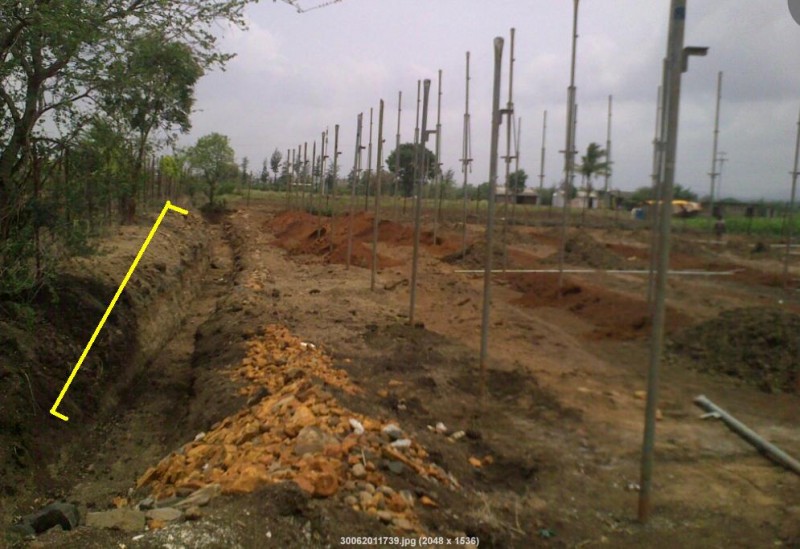
I had to dig gutters on the sides of all my polyhouses / entire land (Picture 1) The main purpose of these deep gutters is to drain all the excess water which comes into my land, during the rains or due to excess flooding, which can be harmful for me. as my neighbour farmers do not follow similar practises.

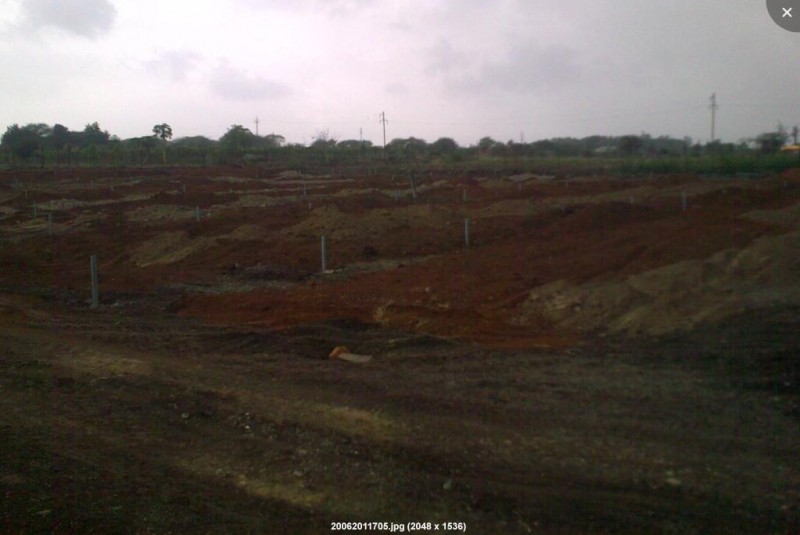
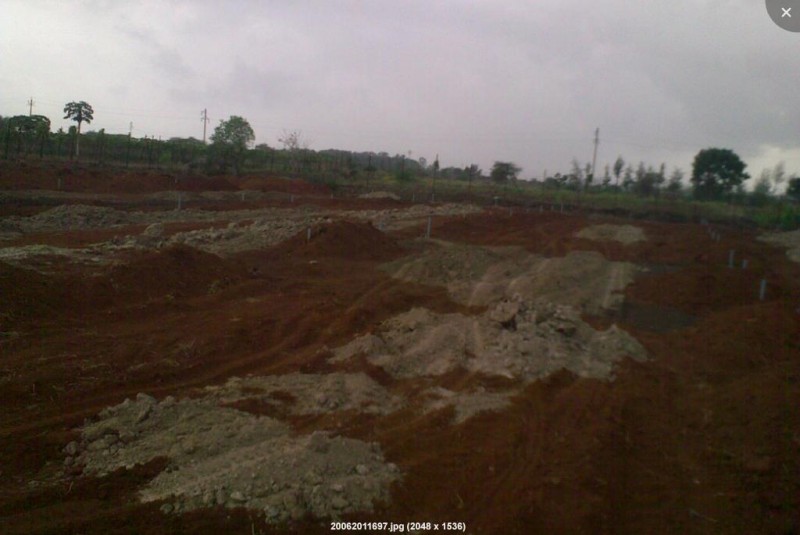
Picture 2 & 3 are for the media (Soil) preparation. theres Red soil, Poita (nutrient rich soil from damn) cow dung and Murum (i dono the english name)

Vivek


Smart Packing & Packaging.

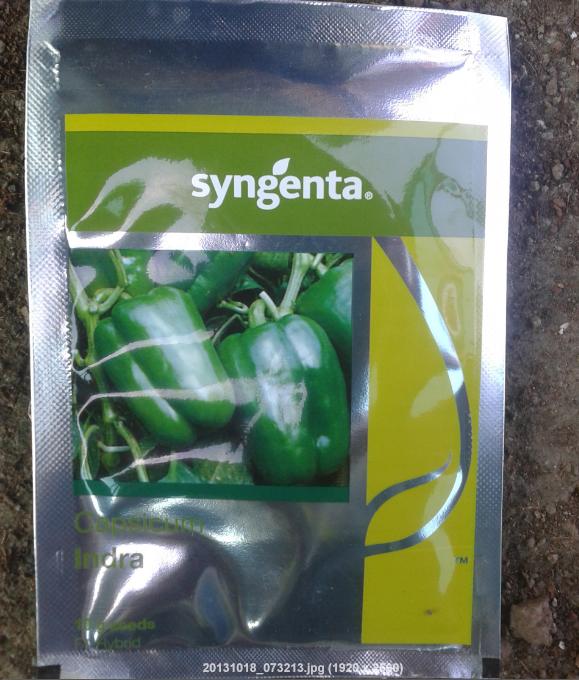
i have recently given Syngenta Indra (Green Capsicum) for germination.
i was reading some posts where growers have bird problems, and i myself have bird problems due to the fishes in the water pond.
so the seed packet is a silver shinny one, not a co-incidence, but on purpose. i have seen farmers put these seed packets to avoid bird problems. as these are shiny and bling a lot :stuck_out_tongue: they flash the birds and keep them away.

Now thats smart packing!


82 DAYS YOUNG

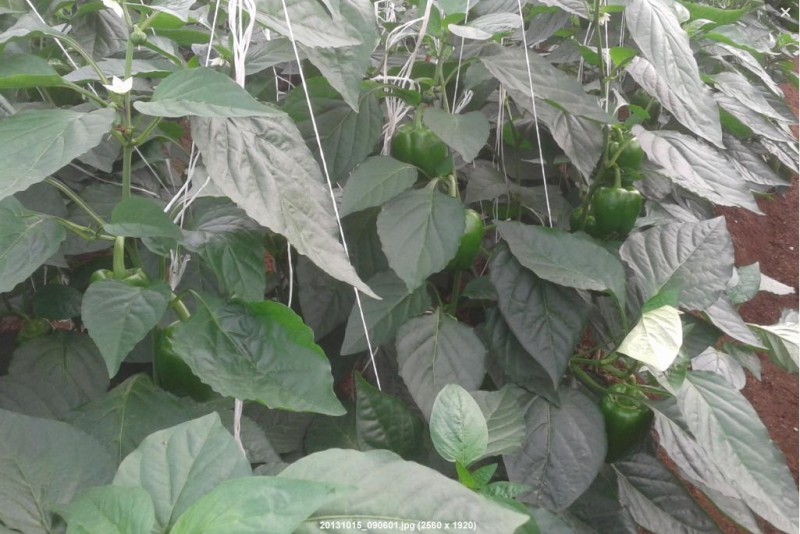
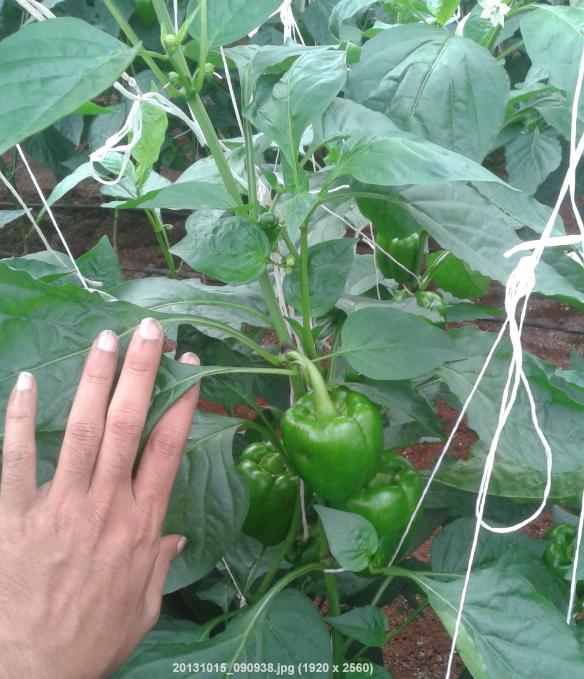
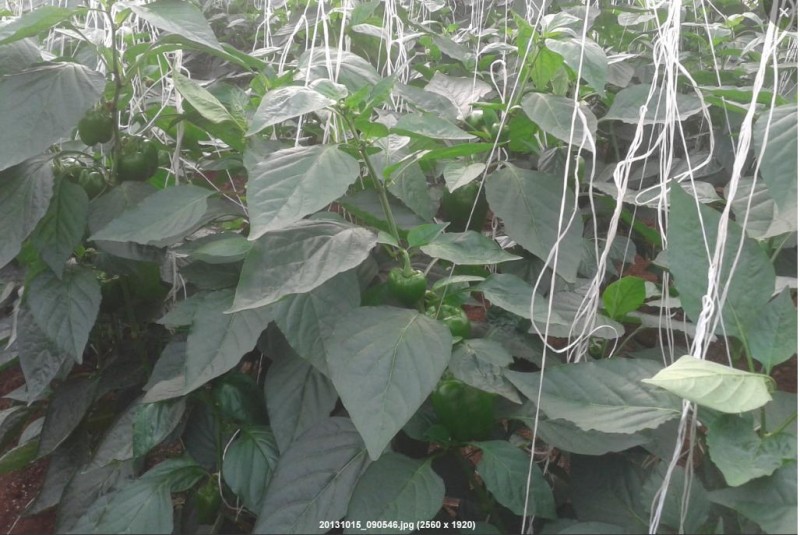
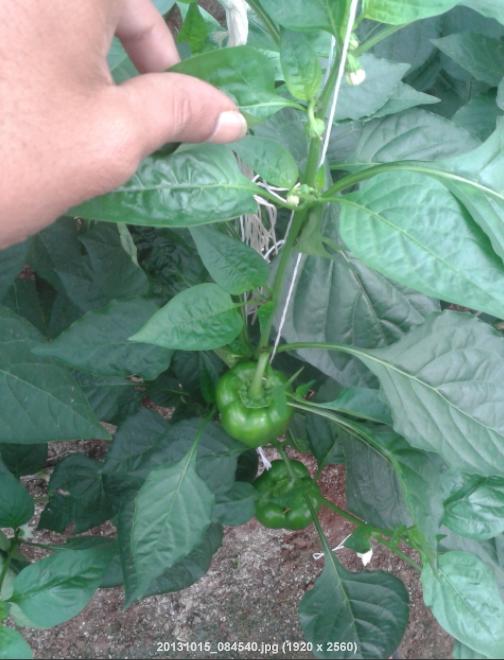
The plants have all four stages. i.e. ready to harvest fruit, medium fruit (which will be ready in 3-4 days, small fruits (which will be ready in 8-10 days, flowering (which will become ready to harvest fruits in about 18-25 days), and buds.

my second batch of harvesting has started and will go on for another couple of days, as the production is continuous now.

Vivek


As i have gutters on the sides of my polyhouse, i’ve had some extra water in ground level in section 1 out of four in the polyhouse.

and section 2 is contrast to it, as it has more of red soil and rice husk in it. so it drains water very quickly.

the funny part is (practical tough) that all my four sections have different characteristics. so while my section 1 is moist and more humid it has caterpillar infestation. and section 2 is low humidity wise and hot, so i spotted some red mites today.

so taking immediate action (limited to 1-5 plants) helps me prevent further measure of spraying the whole polyhouse, this way i can save a lot (pesticides, labor, eletricity etc) and further the color/number flagging system helps me monitor the same plants/area for the changes.

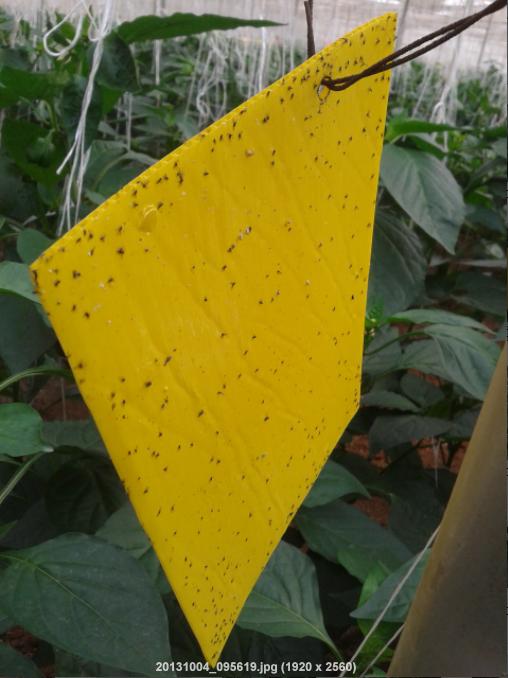
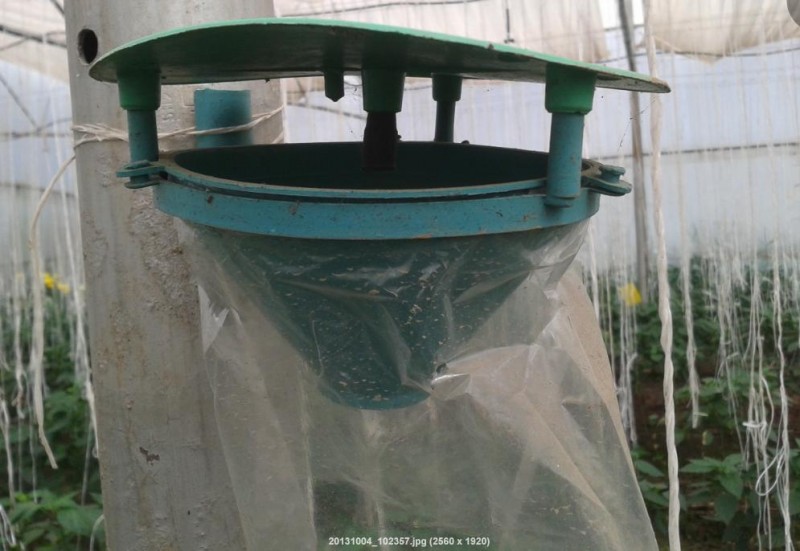
oh and the pictures have nothing to do with the mites and caterpillar. these are some traps i use in my polyhouse.
one of my friend suggested the use of solar powered light traps. which attracts the flying insects on the light principle and traps them. ofcourse in the night time.

Yellow sticky traps are like Rs 10/pc, and work the best for me to trap white flies and the insect trap is for trial, market price is about Rs90-98. there are various fragrance capsules which can be put in it to attract different insects.

Vivek


ok now about the nutrient part.

Major nutrients are Nitrogen, Phosphorus, Potassium
Macro nutrients/secondary nutrients are - Calcium, Magnesium & Sulphur.
Micro nutrients are - Chlorine, Boron, Zinc, Copper, Molybdenum, Iron, Manganese, Nickel.

now there are various products available in the market for these nutrients.

Eg - 00x00x50 (N-00, P-00, K-50) ok its a known fact that N can never be zero. so lets skip that part. P is 0, but Potassium is 50% so what is the rest 50%?

ok two things mixed up! back to nutrients,

Nitrogen - Vegetative Growth
Phosphorus - Root development, Crop Maturity, and flowering.
Potassium - Overall growth

so why use Nitrogen and phosphorus when overall growth can be done by potassium also?

i dono what i am saying, lets continue this tomorrow.

Vivek

MY NUTRIENT FOR THE DAY - CALCIUM

Every fruit / vegetable is 3D (obviously, like any other), length, width, and depth.
they are like balloons, the more (limited) air/material you pump into it (now plz dont take it literally that i am pumping extra nutrients in my plants), the more it expands. pumping meaning the plants natural uptake/absorption process.

now the balloons can be of paper (stiff material), which will crack/burst soon, or of rubber (Flexible material) which will have more capacity as compared to a paper (stiff material).

as i shared earlier, initially during my first year of color capsicum, i had syngenta as well as namdhari, and i had a few issues of cracking in namdhari.
well there can be various reasons for cracking, but an important one is that the fruit is not flexible enough to accommodate the nutrients i add for giving weight and size, so after a certain limit, the fruits (Color capsicum) would start cracking/bursting.

so that is when i learned the importance of “Calcium”

earlier i would think that calcium gives hardness/stiffness to my plants and fruit, just like it does in human body (make bones hard) but i WAS wrong!!
Calcium makes the plants/fruit more flexible. so it can grow, expand and gain weight as i add the nutrients.

now calcium can either be normal (i dono the technical term again, but which is slow release) or in chelated form (quick release and absorption)

then it is in the form of Calci Nitrate, Calci Boron and so many others, so which is to be used when? what is the effect/requirement of these various combinations at different stages ??

i will not keep sharing these unless there is participation!

come on people! i know u guys read a lot, do a lot of research, have lots of experience, so lets have all that we know/ want to know here!

Good day!
Vivek

this was specially for CAPSICUM, not for grapes, or mangoes or tomatoes or cucumber.

all the info are for / related to capsicum only.

Calcium will NOT make my grapes big, ga will :slight_smile: its a different science altogether.
so as of now, its related to capsicum, unless specified otherwise.

You meant ‘come on’ indeed! ;D ;D

geee… :-[
thats what i meant… thanks for correcting :slight_smile:

hey morning!
remember i had some tall and some short plants? uneven growth …
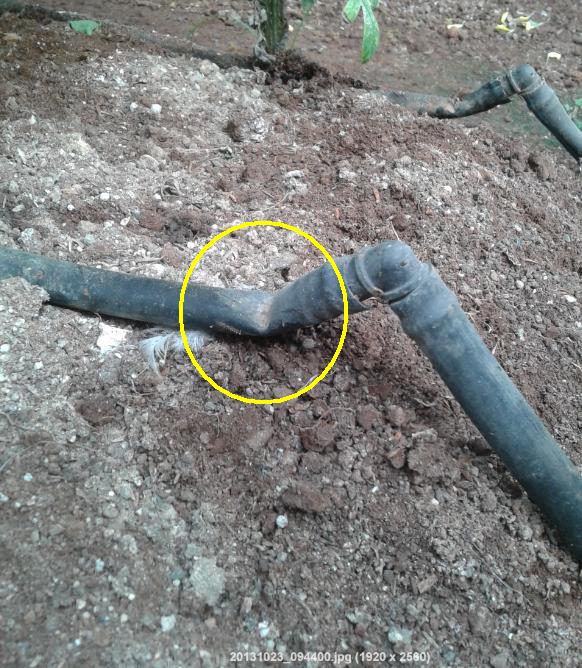
well yesterday, i just remembered that a few of my drips have a bit of blockages, ummm… pinches actually. ( Picture - 1 )

its really a very silly mistake, but it does make a big difference. the drip lines expand / contract due to weather, use. then during installation if proper buffer (extra) length is not considered, it can lead to this. so friends, dont be lazy like me!! and pay attention to every single detail in your setup.

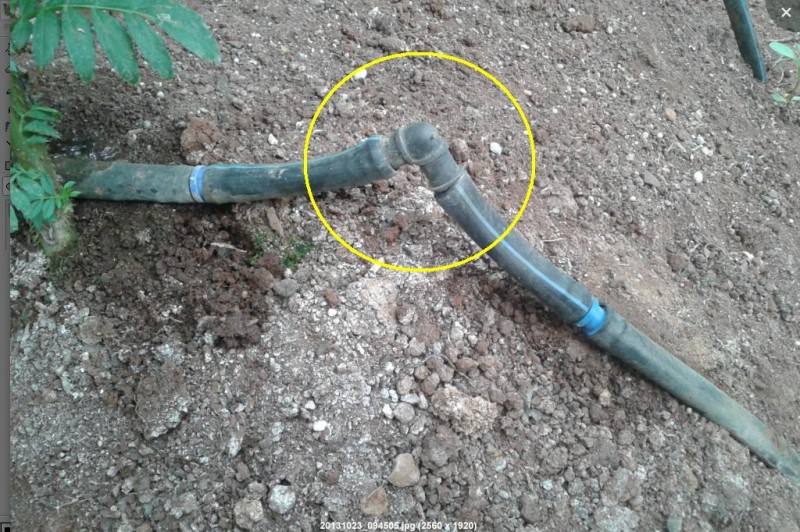
ok and Picture - 2, is again of a very silly mistake i did, you can see these angels (right angel connectors for drip) the cost of these is about Rs.1.5/pc. but why the hell did i go for them ?? theres absolutely NO need for me to have these angel connectors.

the cunning marketing person tricked me into it when i was a bigger idiot!

so there are things which i really need, and things i dont. just because someone is doing it or has it doesnt mean i need to have it too.

HELP !! HELP !!
the polyester strings which i am using for support/tieing of the plants ( Rs.170/kg ) is about 2 years old now, and has started to blister (Picture - 3) , and break suddenly due to the wind and/or the weight on it, resulting to a very big loss of mine.

i really need some help with a support system for capsicum which has more life and economic.

Vivek