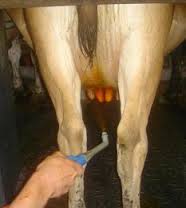
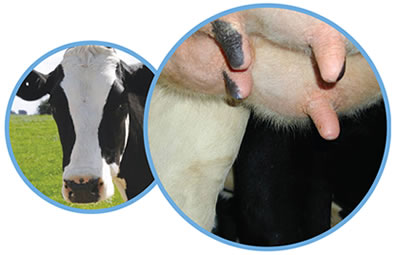
• Provide good cow comfort, give good bedding material, remove excessive hairs in the udder, clean teats by spraying water, and wipe them finally with disposable medicated napkins.
• Ensure that there is no mastitis indication by massaging each teat for oxytocin release.
• Prevent environmental bacteria with a good pre milk dip.
• Wipe teats cleanly with a disposable paper napkin, drying it completely.
• It is recommended to give one and a half minute pause after doing pre milking.
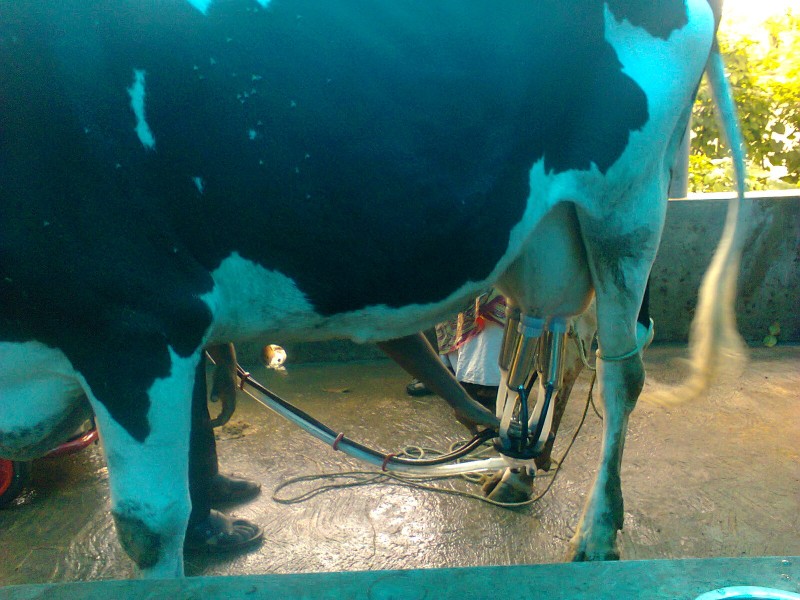
• Ensure that the Liners are in the right position and claw valve to be released before cluster removal.
• Ensure spraying of teat dip solution-iodine based, over the tip of each teat.
• Make sure that the cows are standing by eating feeds, after milking for at least 20 minutes. Ensure that the barn is cleaned well when the cows return to the barn after milking.
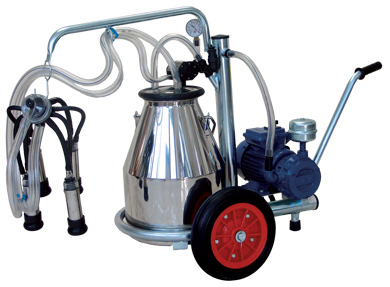
There are many people who had started farms recently in Trichur, Pathanamthitta, Idukki, Wayanad etc. Barring land, you can take it as 1 Lac per cow, which includes cost of the cow, housing, milking machinery, fodder harvesters, fodder chopping machines, feeding utensils, calf bottles etc.
Land cost not included. Start only if you are able to supervise. Otherwise your money will be enjoyed by others. Or you need a very sincere guy to man the show on whom you can rely completely. What the cow has eaten, whether it has got stomach full, how much milk did the cow gave that day, veterinary expenses, see all these you need to believe what that guy says. So getting such a guy is one aspect, if not your presence is very much needed during milking and feeding time. Definitely its a good business, as anything that is coming out of a cow is money. How you make money depends on how you apply its usage. Urine, dung, milk are all money. Who will buy, how can you sell it, how to collect it, should be studied. Try to sell the produce to the end consumers to make maximum returns.
Can anyone give me a suggestion for how to use cow dung as manure. I have planned to store the cow dung in the tank,and all cow cleaned water is also going inside that. I found that installing gober gas tank is a big investment. Is there any other plan with fill the cow dung in the liuid form into a wheel tank and through pipe pour it to the required area. Is there any tank available for that in the market?
Give your suggestions.
What you need is a slurry pump. The slurry pump, pumps the shed cleaning water, urine and dung in liquid form to the fodder growing land or any other place you want provided you do the piping. Its better if you can think of an agitator in the tank which will mix all together making it suitable for pumping.
Find out suppliers of slurry pump. Ensure service after purchase. Its available in India.
Yes Murli. I agree,I will install a slurry pump inside the tank. It will mix up the cowdung,urine,etc.
I will provide one outlet tap at the top to come out once I switch on the pump.
My question is how to carry this limanure which is in liquid form to 5 achres of land. For that ant moving tank is available? If so I will fill it
first to the tank then take it to the required area and pour like flood so that it will be distributed to the other areas.
What do you say?
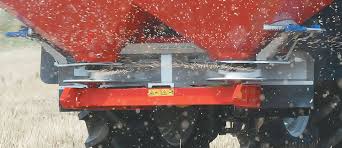
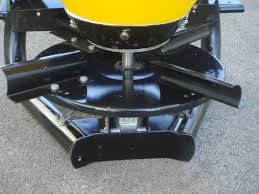
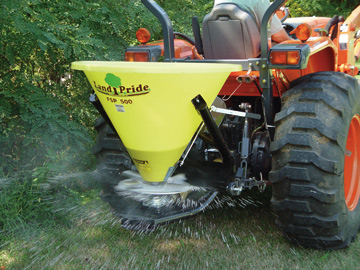
See if you want to mechanize, solutions available in India, from Kuhn. See pictures attached. Pump out the slurry to this machine and use it wherever you want. You plan for the slope of channel so that it will move naturally. If not, this is the only way.
Murali Krishnan
• Provide good cow comfort, give good bedding material, remove excessive hairs in the udder, clean teats by spraying water, and wipe them finally with disposable medicated napkins.
• Ensure that there is no mastitis indication by massaging each teat for oxytocin release.
• Prevent environmental bacteria with a good pre milk dip.
• Wipe teats cleanly with a disposable paper napkin, drying it completely.
• It is recommended to give one and a half minute pause after doing pre milking.
• Ensure that the Liners are in the right position and claw valve to be released before cluster removal.
• Ensure spraying of teat dip solution-iodine based, over the tip of each teat.
• Make sure that the cows are standing by eating feeds, after milking for at least 20 minutes. Ensure that the barn is cleaned well when the cows return to the barn after milking.
An essential part of hygiene control in the Dairy Cow is to improve softness in the teat, health and milk margins, and to eliminate the transfer of bacteria.
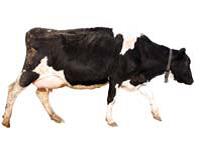
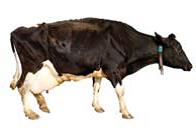
Observe your cows, ideally on a hard (i.e. concrete) non-slip surface. Monitor each cow individually allowing them to make between 6-10 uninterrupted strides. Watch the cow from the side and the rear. Good mobility :Walks with even weight bearing and rhythm on all four feet, with a flat back; long fluid strides possible; or steps uneven (rhythm or weight bearing) or strides shortened; affected limb/s not immediately identifiable. Impaired mobility : Uneven weight bearing on a limb that is immediately identifiable and/or obviously shortened stride. Severely impaired mobility : Unable to walk as fast as a brisk human pace (cannot keep up with the healthy herd) and signs of impaired mobility.
Lameness is known to be a huge welfare issue across the dairy industry worldwide with over 30% of the herd being lame at any one time. However, the prevalence of lameness has been shown to range from 0% to 70% at farm level. Lame cows are not only in considerable discomfort but also in pain and they are also predisposed to further disease challenges (e.g. mastitis, swollen hocks) reduced fertility, lowered milk yield and decreased appetite etc. All these factors significantly affect the welfare of the cows and in addition they have hefty financial implications both in the short and long term. Early and timely recognition, investigation and treatment of any lame animal are very much essential to limit pain, aid recovery and minimize any additional complication. Regular on farm mobility assessment is an very important step in resolving lameness issues. Lameness caused by foot lesions can be both infectious (digital dermatitis, foul) and non-infectious (sole haemorrhages, sole ulcers and white line disease) and this is important for farmers to identify the types of lesions present in order to prevent the causes which can be addressed.
When it comes to do economics of dairy farm we usually take milk yield per day and do calculations. For accurate analysis we need to have milk yield data for complete lactation cycle as yield changes continuously
.
Recently came across a paper with Lactation curve for HF cross breed for different lactation cycle. Since the raw data has been provided by NDRI Karnal so it is very much reliable. This data has been compiled for 733 cows for 12 years milk yield (from 2000-2011).
Tried to regenerate the lactation curve and did some mathematics. Please check the attachment and following observation:
Lactation Cycle - First Lactation Second Lactation Third Lactation Forth Lactation Fifth Lactation
Total yield 305 days in kg- 3759 4250 4635 4729 4625
avg yield per day in kg - 12 14 15 16 15
as peak milk % - 85.0 80.5 80.0 75.6 75.8
Based on that analysis : When we go to buy a cattle and Seller tells that milk is let’s say 15 kg per day and assuming that it’s the peak milk yield that he has quoted (and he’s not cheating and you have confirmed the same), You can get the approximate total milk yield in the cycle by multiplying the peak milk yield by 245. So in this case it will be 15X245 which is around 3700 kg.
Studying these curves will also give you answer why experts in the forum advise to go for cattle in 1st or 2nd lactation.
Hope it will be of some use to you guys also
Very shortly I’ll share the same analysis for Sahiwal cow also.
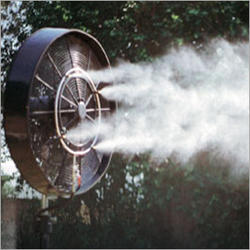
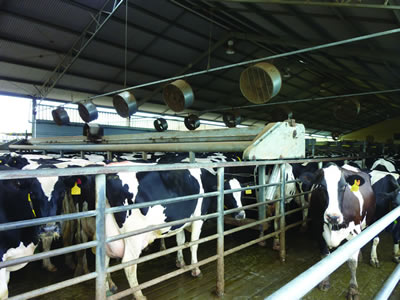
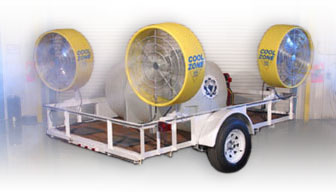
[i]High temperatures are never good for a dairy farm. Heat waves are dangerous for cows. It may lead to stress driven illness such as pneumonia. When dairy cows are not healthy, milk production decreases to a large extent. A 10-15% decrease will be an issue for animals as well as the owner. When cows are pregnant during high temperatures, it might lead to premature calving, giving birth to unhealthy calves. Calves born in such a way may not survive and by any chance if it survives, it will have health issues. The mother cows also end up in a stressful situation leading to other problems. Making use of a misting fan could be a good solution for farmers who will have to deal with high temperatures. Dairy farms see a huge production drop, resulting in a big drop in their income. The milk collection will be affected drastically due to this reason. In such situations, misting fans helps cows to manage the heat stress. Cows feed intake will also be affected when heat stress is there, resulting in the cow not getting enough ingredients needed for production. Cows reduces feed intake during this time, becomes restless, and remain uncomfortable in the night too. Their health will be affected due to this. Farms having cow cooling devices overcomes such situations and the cows there are happy, cool and healthy. Cows giving premature birth to a calf may produce milk for a shorter period less than the period compared to normally delivered cows. Heat stress poses a significant risk to cows. Rising temperatures can cause problems such as suppressed feed intake and reproductive stress.
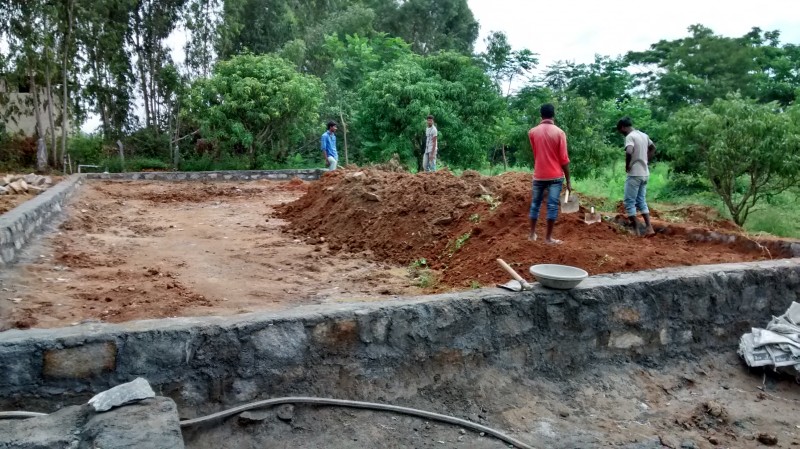
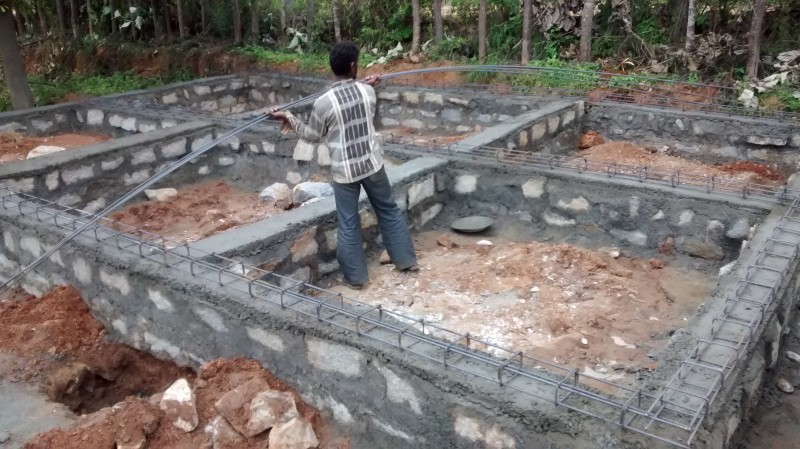
I am very happy to share the few pics of my on going Dairy farm set up at Bangalore.
We have made a Sailage to store the fodders of a capacity of 75 MT,and shed to accommodate 40 Cows.
It will be launched in the month of August.
Hello shesha12
Kindly upload more picture of your dairy farm.
If possible please upload shed design & picture of shed .
How much land required for 40 cows project except cultivation land ?
Still it is in construction stage. I will upload it periodically.
I have taken a dim of 30x80 for 40 cows. There is no such design,but we are doing it on how we need based on our requirement.