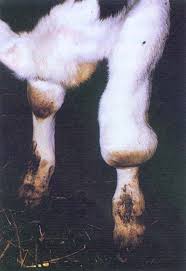
[i]Brucellosis is a very contagious disease in animals and is caused by bacteria. Cattle usually get the disease from contaminated feed, water, or after licking infected calf or another cow. Most of the infected animals remain carriers of this disease for the rest of their life. Cows loose their calf if they are pregnant while getting infected. By any chance, if the cow gives birth to a calf, they are born weak and die within a short time. Cows develop a type of swelling on the knees. This disease can easily be transmitted to human beings. Disease can also spread through milk if humans consume it without pasteurization. Brucellosis can also spread from the vaginal discharge of an infected cow or an aborted foetus. Brucellosis can be prevented by vaccinating young calves. The main signs of brucellosis in cattle are abortions and premature calf birth. In sheep and goats, the main signs of brucellosis are abortions in the herd, swollen udders due to infection of the mammary glands, swollen testicles, fever and nervousness.
Brucellosis infection can occur in humans, cattle, goats, sheep and pigs. This is a notifiable disease. In humans, the symptoms can be fever, headache, muscle and joint pain, getting tired very fast. If not attended soon, death can happen.
You can manage with enough greens and dry fodders but you need to feed other cakes like copra(coconut), gingelly, groundnut, rice bran, wheat bran, maize, minerals and vitamin supplements. Cows must have the genetic potential to produce milk and only such cows will be able to produce more milk when its given a balanced ration.
There is no effective way to detect the infected animal by their appearance.
Murali krishnan
[/i]