BULKY ORGANIC MANURE IN SOIL ORGANIC MATTER BUILD UP
1.Farmyard manure ( cattle manure )
2.compost
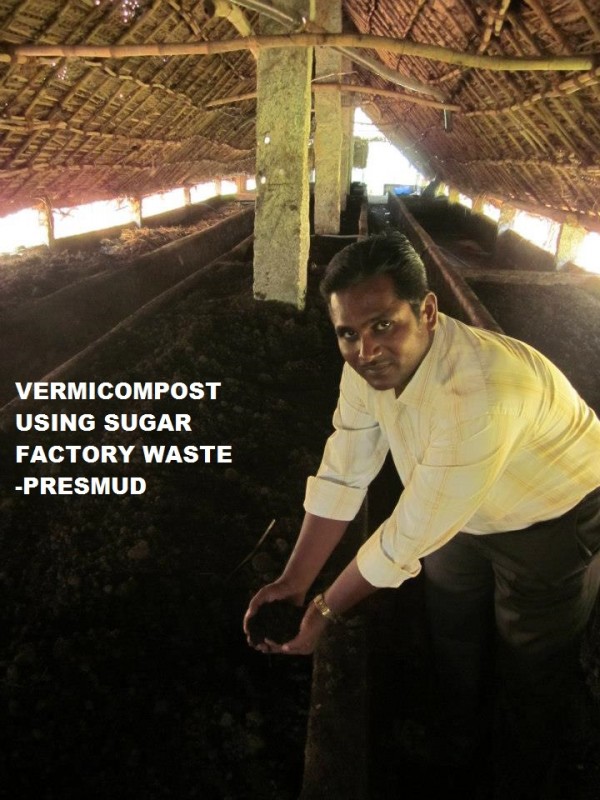
3.vermicompost
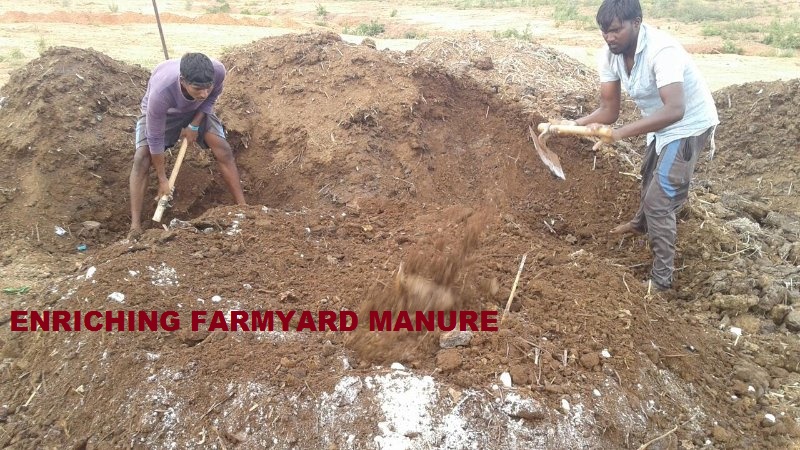
4.Enriched compost
5.Pressmud ( Sugarfactory byproduct ) -RIch in secondary and micro nutrients and potash …very good for better crop growth and high yield
farmyard manure is an important bulky organic manure derived from cattle with nitrogen,phosphorus and potasium content being respectively 0.3%, 0.1 to 0.2% and 0.1 to 0.3%
And cow urine contains 0.9 to 1.2% Nitrogen, 0.5 to 1.0% potash and very small amount of phosphorus
Poultry manure - 1.0 to 1.8% Nitrogen ,1.4 to 1.8 % phosporus , 0.8 to 0.9 % potash
However this percentage of nutrients from various animal sources varies in accordance with the type of feed the animal is fed …
Compost can be made using cow dung or farm waste , and weeds & green leaves
Enriched compost -The cured compost or farmyard manure is mixed with azospirillum , phosphobacteria , azotobacter , acetobacter , pseudomonas each 0.2% and rock phosphate 2.0% in 1 MT of farmyard manure or compost . This can be kept for 20 days at 40% moisture. The microbes grows fast and increase the usable nutrients level more than ordinary compost or farmyard manure…VAM ( Vascular Arbuscular Micorhiza ) - 2 types - Endo and exo VAM are available …This help aborb water and nutrients and control fungi and pathogenic nematodes…VAM can be applied@ 5 -10 kgs per tones of compost or Farmyard manure
Vermicompost -
Carbon - 9.5 to 17.95%
Nitrogen - 0.5 to 1.5%
Phosphorus - 0.1 t 0.3 %
Potasium - 0.15 to 0.57 %
Sodium - 0.07 to 0.3 %
copper - 2.95 mg/kg
Iron - 2.93 mg/kg
Zinc - 5.7 to11.5 mg/kg
Sulphur - 128-548 mg/kg
The farm yard manure ( cow manure and poultry manure should be completely cured and composted before applied in the field .
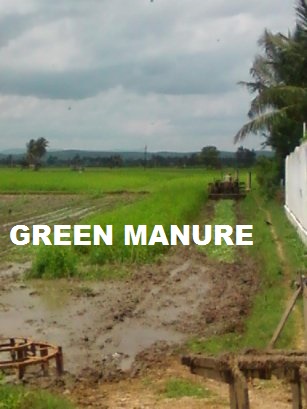
Compared to green manure , the bulky organic manure contain more active part of organic carbon that is fast decomposed and release enough nutrients to the plants and recalcitrant organic matter ( The organic carbon that resist decomposition ) is less in case of cattle manure …
However the excess application of farmyard manure does not increase yield more beyond a certain limit .Because when excess quantity is applied , the soil microbes increase rapidly and release nutrients so fast , and part of the quickly released nutrients will not be utilized by the plants and this unutilized part of nutrients will be either lost through volatilization in case of nitrogen or leaching …sometime the fast multiplying microbes use part of this nutrients for its own metabolism …
Also when microbial population increase rapidly , it consume all the oxygen in the soil and create anaerobic condition. In this situation , more Carbin di oxide produced by plant roots and bacteria are accumulated in the soil that form methane through chemical reaction in soil environment and soil heat keeps increasing .This in turn will limit roots growth and prevent nutrients and water uptake .So plant will start stunting
For example , if you want to grow tomato , one acre tomato cultivation needs 80 kg Nitrogen , 100 kgs of phosphorus and 100 kgs of potash
To supply 80 kgs of nitrogen , we need to apply 27,000 MT of cattle manure per acre …But the availability of nitrogen from cattle manure is just 50-60 % only .In this circumstances we need to apply double the quantity of cattle manure say , 55 MT per acre .If we apply 55 MT of cattle manure to soil in one acre ,what would happen ? will it increase yield corrspondingly to the quantum of cattle manure applied ot soil ?
No …in scientific and practical point of view
Another big "NO " for its high market price for cattle manure
But one advantage in using bulky organic manure is that it makes most of the micronutrients and secondary nutrients available for the plants’ use . It needs less irrigation water compared to the field cultivated with synthetic fertilizers …
Thread grows further …